
The Art of Letting Go: Living Life Without Baggage
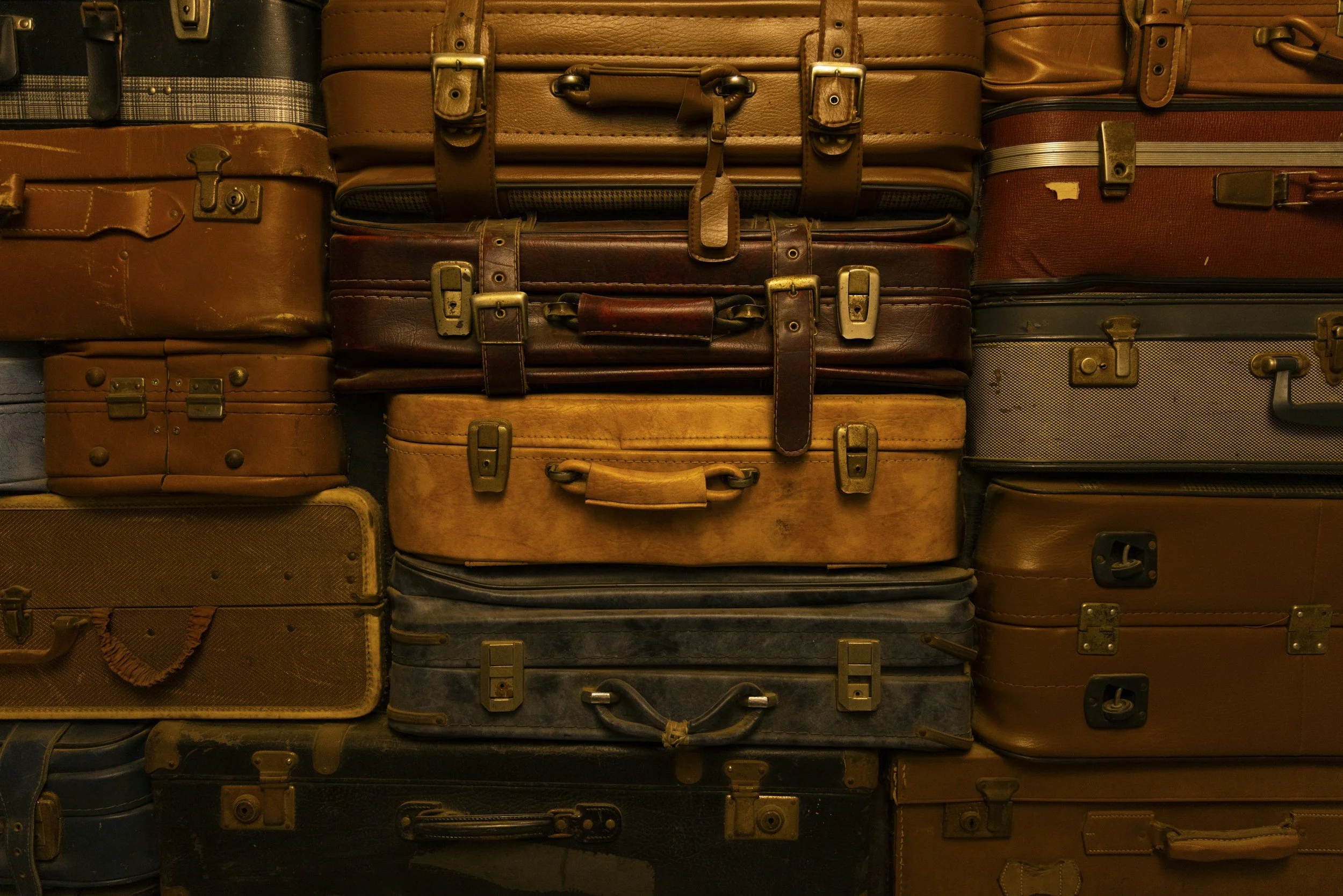
Have you ever found yourself dragging invisible weight through life? The kind that no one else can see, but you feel it every single day? We all carry baggage—not the kind you check at the airport, but the emotional, spiritual kind that accumulates over time and weighs down our souls.
Picture this: a family vacation where the luggage becomes so overwhelming that it transforms from helpful belongings into burdensome baggage. Every stop requires unloading, rearranging, and struggling to fit everything back in. What should be joyful moments become exercises in frustration. This is exactly what happens when we refuse to let go of the hurts, disappointments, and wounds from our past.
The Baggage We Carry
Our invisible baggage comes in many forms. There are scars—those reminders of past wounds that should speak of victory and survival, yet too often we find ourselves worshiping the wound instead of celebrating the healing. Every scar tells a story: "Yes, I went through something difficult, but I'm still here. I didn't die. I overcame."
Then there's emotional baggage: guilt over things we did or didn't do, shame that attaches itself to our identity, and regret that whispers we should have done things differently. Many people also struggle with a poor self-image, dragging around a distorted view of themselves that affects every area of life—their relationships, their work, their confidence.
But perhaps the heaviest baggage of all is unforgiveness.
The Weight of Unforgiveness
Medical professionals have discovered that unforgiveness creates measurable harm in our lives: stress, anxiety, depression, insomnia, and physical fatigue. When we refuse to forgive, we don't just carry a memory—we allow hurt to become our identity.
Unforgiveness whispers lies: "I'm always the victim. Nobody loves me. Life is unfair. I can't trust anyone anymore."These thoughts become prison walls, and here's the truth: when we hold someone else in the prison of our unforgiveness, we're locked in that same cell with them.
The Bible instructs us clearly: "Therefore, since we are surrounded by so great a cloud of witnesses, let us lay aside every weight and the sin which so easily ensnares us, and let us run with endurance the race that is set before us"(Hebrews 12:1). You cannot run a race while dragging baggage behind you.
The Difference Between Weights and Sins
It's important to understand that weights and sins are different. Sins are clear violations—the things we know are wrong. But weights are things we pick up along the way: attitudes, habits, lifestyles, even relationships that slow us down.
It's not wrong to feel depressed, but it is wrong to stay depressed
It's not wrong to feel angry, but it is wrong to nurture that anger until it transforms into revenge
Shame about our mistakes is natural, but letting shame become our identity is dangerous
Our mistakes were never meant to define us—they're just part of the journey from one victory to another.
The Power of Forgiveness
So what is forgiveness? It's the willingness to change your attitude about a relationship. It means to pardon, to cancel a debt, to excuse. When you change your attitude, God changes your heart.
A Story of Radical Forgiveness
Consider the powerful story of Corrie ten Boom, who along with her family hid Jewish people from the Nazis during World War II. After being discovered and imprisoned, she endured unspeakable abuse at the hands of a particularly cruel guard. Her sister died in that camp from the mistreatment.
Years later, after speaking about God's forgiveness, that same guard approached her, now claiming to be a Christian. He extended his hand and asked, "Will you forgive me?"
In that moment, she couldn't. But she prayed, "God, send your forgiveness through me." She raised her hand, and the moment they touched, God's power flowed through her. She was able to say, "Brother, I forgive you."
If she could forgive, so can we.
The Choice to Forgive
Forgiveness isn't about feeling like it—it's an act of the will. Ephesians 4:32 reminds us: "Be kind to one another, tenderhearted, forgiving one another, even as God in Christ forgave you."
Think about that. God, who is perfect, forgave you. God, who is perfect, forgave me. When we say "I can't forgive," what we're really saying is "I won't forgive."
Two Essential Steps to Forgiveness
1. Forgive immediately. Don't wait until you feel like it, because you probably never will. It's not about how big or small the offense is—it's about how long you choose to hold onto it. Even a small weight becomes unbearable when you refuse to put it down.
2. Forgive completely. God's grace is greater than all our sins. Greater than any mistake, any failure, any wound. Romans 5:20 tells us that where sin abounds, grace abounds much more.
Living Free
Forgiveness is like watching baggage go around the carousel at the airport. You can choose to let it pass by, but if you stand there long enough, it will come back around. Every time it appears, you'll be tempted to grab it again. But you have to decide: that's not my bag anymore. I've cast it onto the Lord.
When we truly forgive, three things happen:
We can live positively in a negative world, seeing the good instead of only the bad
We can live with enthusiasm—which literally means "to lean into God"—drawing on His strength when ours runs out
We can genuinely love others, freed from the bitterness that blocks authentic connection
Your Freedom Moment
As we approach seasons of family gatherings and celebrations, many dread the encounters with certain people because of past hurts. But tonight, this moment, can be your "indeed" moment. The Bible says, "Whom the Son sets free is free indeed." Not just free, but free indeed.
What if you started each day by pre-forgiving people? Imagine waking up and saying, "God, today I forgive everyone who might cut me off in traffic, take my parking spot, or be rude to me. I forgive them in advance." When it happens, you're already free.
The peace of God can be the umpire of your heart, making the calls that keep you in bounds. Your conscience is like a warning light on a dashboard—ignore it, and you're headed for trouble. Pay attention to it, and you stay on course.
God is big enough to handle your baggage. You can forgive yourself for past mistakes. You can forgive others for their offenses. And you can walk into your future unencumbered, free to run the race set before you with endurance, joy, and hope.
The art of letting go isn't about forgetting—it's about refusing to let the past define your future. It's about choosing freedom over bondage, peace over turmoil, and love over bitterness.
What baggage are you ready to cast off today?