
Building a life that lasts — lessons from Psalm 127
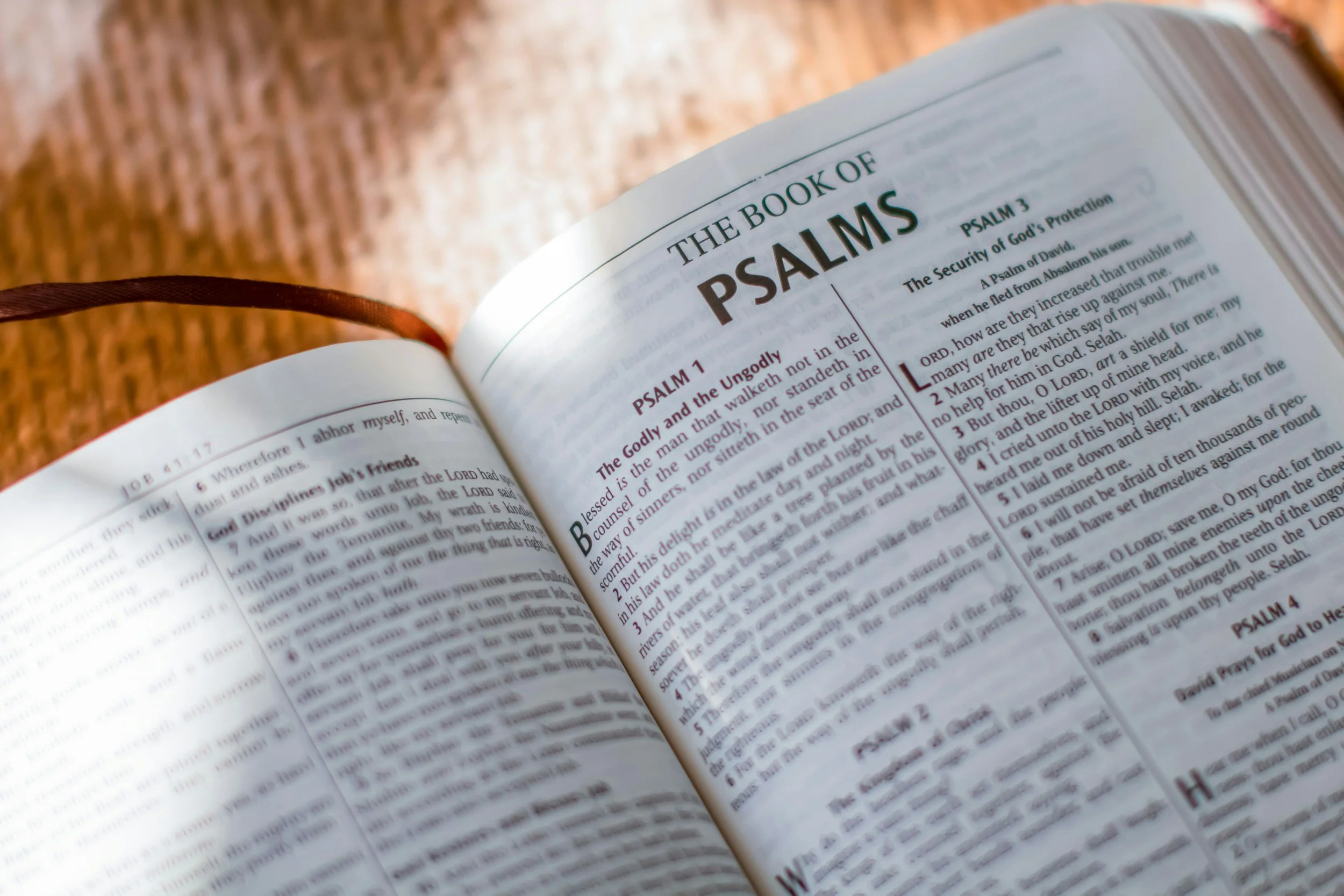
Solomon was the wisest, wealthiest man who ever lived. He built magnificent cities, wrote thousands of proverbs — and still lost his way. His life raises a question worth sitting with: are you building something that will last?
Psalm 127
Psalm 127 opens with one of the most clarifying statements in all of Scripture: Unless the Lord builds the house, the work of the builders is wasted. Unless the Lord watches over the city, the guards keep watch in vain. In a single verse, Solomon lays out a truth that cuts straight through every productivity hack, every hustle strategy, every ambition we carry — what we build matters far less than who we build it with.
The foundation beneath everything
Matthew 7 · 1 Corinthians 3
When Solomon writes about building a house, he isn't talking about architecture. He's talking about a life. Every one of us is constructing something day by day — a career, a family, a legacy, a reputation. The question isn't whether we're building. It's what we're building on.
In Matthew 7, Jesus tells the story of two builders. One builds on rock, one on sand. Both houses face the same storms. Both are tested by the same wind and rain. The difference isn't the storm — it's the foundation. A life built on Jesus, on His word and His ways, is a life that can weather what comes. A life built on shifting values will eventually crack under pressure.
Paul adds another layer in 1 Corinthians 3, describing the materials we use to build our lives.
GOLD, SILVER, PRECIOUS STONES
Eternal priorities. Kingdom investments. Choices made in obedience and love.
These survive the test.
WOOD, HAY, STUBBLE
Self-directed ambitions. Accumulated things. Plans built on our own terms.
These burn away.
It's worth asking honestly: what am I building with?
Starting well isn't enough — you have to finish
Solomon is a fascinating figure precisely because he is a study in contrast. More wisdom than any man alive. A magnificent temple. Wealth and influence beyond imagination. And yet he drifted — 700 wives, 300 concubines, foreign gods on the altars. He had everything, and still lost his way.
His life is a powerful reminder that it is not enough to start well. We must also finish well.
Of 500 leaders mentioned in the Bible, only a small fraction are recorded as having finished well. That number should not discourage us — it should awaken us.
Finishing well means crossing the finish line without scandal, with your family intact, having completed the assignment you were given, full of faith rather than bitterness. It isn't about being perfect along the way. It's about staying connected to the One who holds the blueprint — and returning to the foundation when you've wandered.
WHAT FINISHING WELL LOOKS LIKE
No moral collapse — integrity intact to the end
Family relationships honored, not sacrificed to ambition
The assignment completed, not abandoned midway
Crossing the line full of faith, not bitterness
Building your home God's way
Ephesians 5–6
Psalm 127 isn't only about individual lives — it's about families. And God hasn't left us without a plan for the home. Ephesians 5 and 6 lay out a vision for what a flourishing family actually looks like.
It begins with mutual submission — husbands and wives choosing unity over self-interest, coming into agreement rather than competing for control. Husbands are called to love unconditionally: to lead, protect, and provide in a way that means a wife never feels like she's on probation, never feels her standing in the home depends on her performance. That kind of love creates the environment where a wife can freely choose to honor her husband's leadership — not because she has to, but because she is loved well.
Children are to honor their parents. And parents must remember that as precious as children are, they should never be elevated above the marriage itself. The marriage is the foundation of the home. When children grow and move on, the husband and wife who kept investing in each other will still have something beautiful. Those who neglected the relationship in favor of parenting alone may find themselves strangers sharing a house.
The weight we were never meant to carry
Verse 2 of Psalm 127 describes the person who rises early and stays up late, grinding and striving and worrying — then gently reminds us that God grants rest to those He loves. It's a picture most of us recognize immediately.
THE WEIGHT WE CARRY IN A SINGLE DAY
We wake up carrying yesterday's unresolved problems
We scroll through news and absorb the anxieties of a broken world
We go to work under performance pressure
We come home carrying relational burdens
We go to bed already loading tomorrow's concerns onto our shoulders
God is not asking us to be irresponsible or passive. He is asking us to trust Him. The birds of the air, as Jesus pointed out in Matthew 6, don't worry about where their next meal is coming from — they simply live in the rhythm of a world their Creator sustains. How much more does God care for you?
A life worth examining
Socrates said the unexamined life is not worth living. There is wisdom in that. It's worth pausing regularly to ask hard questions of yourself — not to condemn, but to course-correct.
QUESTIONS WORTH SITTING WITH
Am I building with the right materials — or chasing things that won't survive the test?
Am I staying connected to the foundation, or have I quietly drifted?
Am I finishing the race set before me — or have I wandered off course without noticing?
The invitation of Psalm 127 is not a call to strive harder. It is a call to build differently — with God at the center, His word as the blueprint, and His grace as the fuel for every step forward.
When we build that way, what we construct will last far beyond us.
Build with the right foundation — and build to finish.